
Plantar Wart Treatment and Removal
Effective, patient-focused care for painful plantar warts, including Swift microwave therapy that targets the HPV virus.
What You Need to Know
Understanding plantar warts, what causes them, and how they are treated.
Understanding Plantar Warts
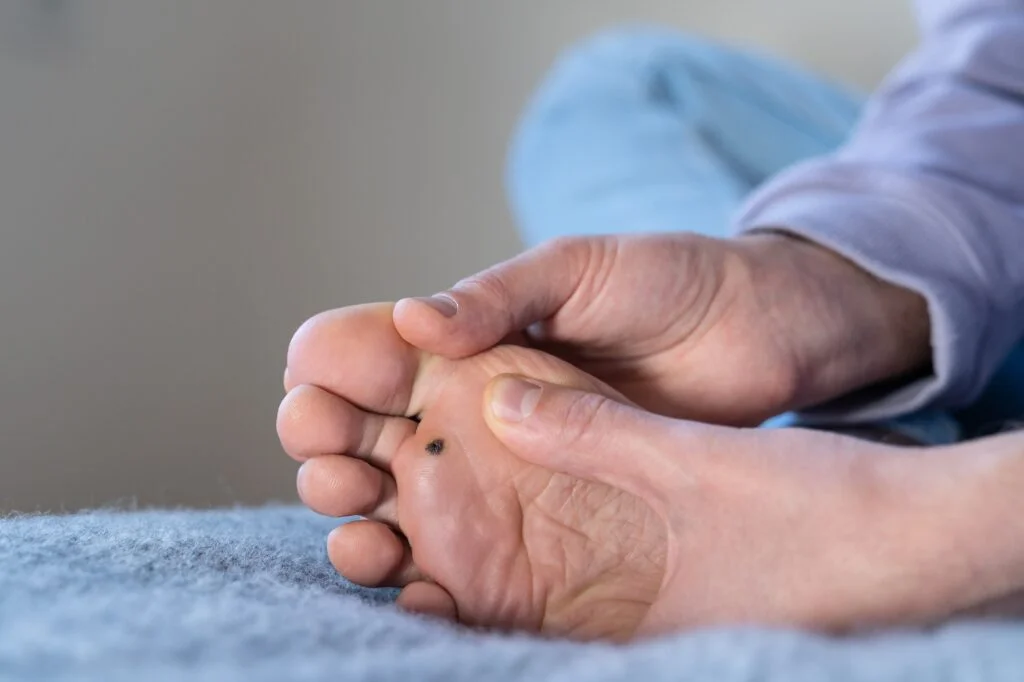
A wart is a small growth on the skin that develops when the skin is infected by a virus. Warts can develop anywhere on the foot, but they typically appear on the bottom (plantar side) of the foot. Plantar warts most commonly occur in children, adolescents, and the elderly. Because the bottom of the foot has a lot of pressure, warts grow inward into the tissue of your foot and are sometimes covered by a callus.
Unlike other warts, plantar warts are typically quite painful, as the pressure from walking and standing forces them to grow into your skin. Plantar warts are caused by the human papillomavirus (HPV), specifically types 1, 2, 4, 60, and 63. Underneath the skin, the wart can have finger-like roots that reach down and grow, making them difficult to treat from the surface.
Symptoms may include thickened skin that resembles a callus, pain when walking or when the sides of the wart are squeezed, and tiny black dots on the surface. These dots are actually dried blood contained in the capillaries. Some patients describe the feeling of a painful pebble in their shoe. Warts can occur alone (solitary) or in a cluster of smaller warts (mosaic).
Plantar warts spread through direct contact with HPV, often entering through a small cut or scrape. They are commonly picked up in public swimming pools, communal showers, gyms, and locker rooms. Children and those with weaker immune systems are more susceptible.
If your wart is painful, bleeding, spreading, or not responding to over-the-counter treatments, it is time to see a podiatrist for a proper evaluation.
Treatment Options and Prevention
Although plantar warts may eventually clear up on their own, most patients desire faster relief. The goal of treatment is to completely remove the wart. Your podiatrist may use topical or oral treatments, laser therapy, cryotherapy (freezing), acid treatments, curettage, or surgery, depending on the size and location of the wart. Because warts are stubborn and may return, follow-up visits and adherence to home care instructions are important.
Swift is an FDA-cleared technology that has proven highly effective in the removal of plantar warts. It delivers low-dose microwave energy through a specialized probe that targets the underlying HPV virus by stimulating a natural immune response in the body. We like to say that we’re addressing the root cause, not the symptom.
The Swift protocol typically involves 3 to 4 treatments, spaced 4 weeks apart to align with the body’s natural immune cycle. Each treatment lasts only 5 to 10 minutes with no breaking of the skin and no bandages required. Patients can resume daily activities immediately, and the sensation is similar to a small scratch that subsides quickly.
Prevention plays an important role in avoiding recurrence. Cover your feet with shower shoes or flip-flops in public areas, keep your feet clean and dry, change socks and shoes daily, and avoid touching warts, as they can spread.
If you are considering over-the-counter medications, ask your podiatrist first, as some products can damage skin and may be dangerous for patients with diabetes or poor circulation. Schedule an evaluation to find the treatment plan that is right for you.
Find Plantar Wart Care Near You
Visit one of our convenient locations for expert plantar wart evaluation and treatment.




Don’t let a painful plantar wart slow you down, we’re here to help.
Book an appointment today and get back to walking comfortably.