
Ingrown Toenail Treatments for Painful Toes
Gentle, effective care for painful ingrown toenails that gets you back to your normal activities quickly.
What You Need To Know
Understanding ingrown toenails, their causes, and when to see a podiatrist.
Understanding Ingrown Toenails
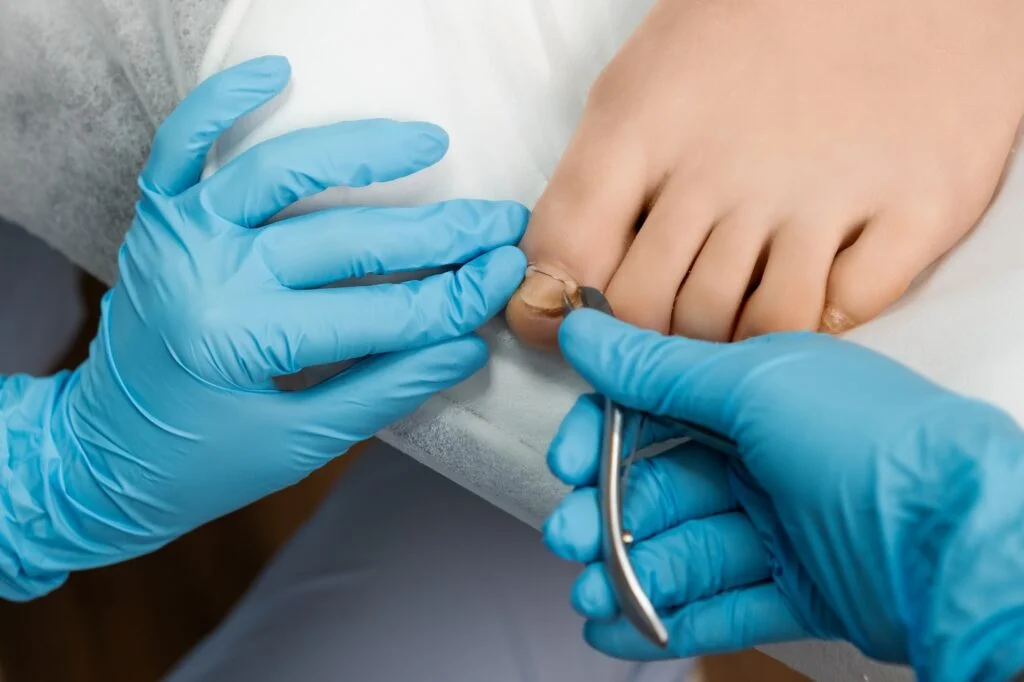
An ingrown toenail occurs when the corner of your toenail grows downward into the adjacent skin, digging painfully into the soft flesh. The big toe is the most common location, but any toenail may become ingrown. When a toenail is ingrown, it is curved downward or flared out and grows into the skin, usually at the sides of the nail. This irritates the skin, which may create pain, redness, swelling, and warmth in the toe.
Ingrown toenail symptoms include pain, swelling, redness, drainage, and odor. If an ingrown nail eventually cuts into the skin, bacteria may enter and cause an infection of the adjacent area, which is often marked by increased pain, redness, and swelling. Oftentimes there may be drainage and a bad odor.
Causes of ingrown toenails include heredity, trauma such as stubbing your toe, improper trimming (cutting nails too short encourages the skin next to the nail to fold over it), tight or improperly sized footwear, and nail conditions like fungal infections or a previous nail injury. Ingrown toenails are the most common nail problems patients experience.
Generally, ingrown toenails resolve with simple home remedies. However, if you have diabetes, peripheral vascular disease, or another condition that causes poor circulation, you should seek professional treatment as soon as possible and not try to treat it yourself. See your foot doctor if there is any sign of infection around the toenail such as drainage or excessive redness, so treatment can begin right away.
Treatment, Prevention, and Recovery
At University Foot and Ankle Institute, our podiatrists carefully evaluate your foot and review your medical history, then create an individualized treatment plan. This may include a prescription for topical or oral medication, or placing a splint under the nail to help it grow away from the skin and relieve discomfort. If an infection is present, an oral antibiotic may also be prescribed.
Often a minor in-office procedure will ease the pain and remove the offending nail. Treatment is performed by gently numbing the toe and removing the offending corner of the nail. For chronic problems or repeated infections, a chemical can be applied to the nail root or matrix to permanently prevent regrowth of the ingrown portion while preserving the healthy nail tissue. Cosmetically, it is often impossible to tell the procedure has been performed.
Following the procedure, a simple bandage is applied. Most people experience very little pain afterward and may resume normal activity within a day or two. If your doctor has prescribed an oral antibiotic, be sure to take all the medication, even if your symptoms have improved.
Many cases can be prevented. Trim your toenails straight across, and do not round the corners or cut them too short. Wear comfortable shoes with a wide toe box, and avoid tight shoes or high heels. Do not place cotton under the nail or attempt bathroom surgery at home. If you have an ingrown nail, do not be afraid to come in, your treatment will be gentle and virtually painless, getting you back to your normal activities almost immediately.
Locations Offering Ingrown Toenail Care
Find a University Foot and Ankle Institute location near you for expert toenail care.




Don’t let a painful ingrown toenail keep you from the activities you love.
We’ll get you comfortable and back on your feet quickly. Book your visit today.