
Peripheral Arterial Disease Care
Restore circulation and protect your feet with expert diagnosis and treatment for peripheral arterial disease.
What You Need To Know About PAD
Learn how peripheral arterial disease affects your legs and feet, and how we can help.
Understanding Peripheral Arterial Disease
Peripheral arterial disease, also known as PAD, is a circulation problem where blood flow to your extremities is restricted. PAD is caused by narrowing of the arteries that deliver blood to your arms and legs. Fatty deposits accumulate, causing atherosclerosis and reducing this blood flow. PAD affects 8 to 12 million Americans and one in every five adults over the age of 70.
Some people have no symptoms of PAD, but many suffer from leg pain especially when walking. The pain or cramping starts with activity but usually eases after resting. Other symptoms include leg weakness or numbness, foot or leg coldness, changes in skin color, sores on your feet, toes, or legs that will not heal, and hair loss on the feet and legs.
If you have leg pain or weakness, visit your foot doctor right away. PAD can cause complications such as heart attack, stroke, and critical limb ischemia that can lead to gangrene and amputation. Early diagnosis and treatment help prevent these serious outcomes.
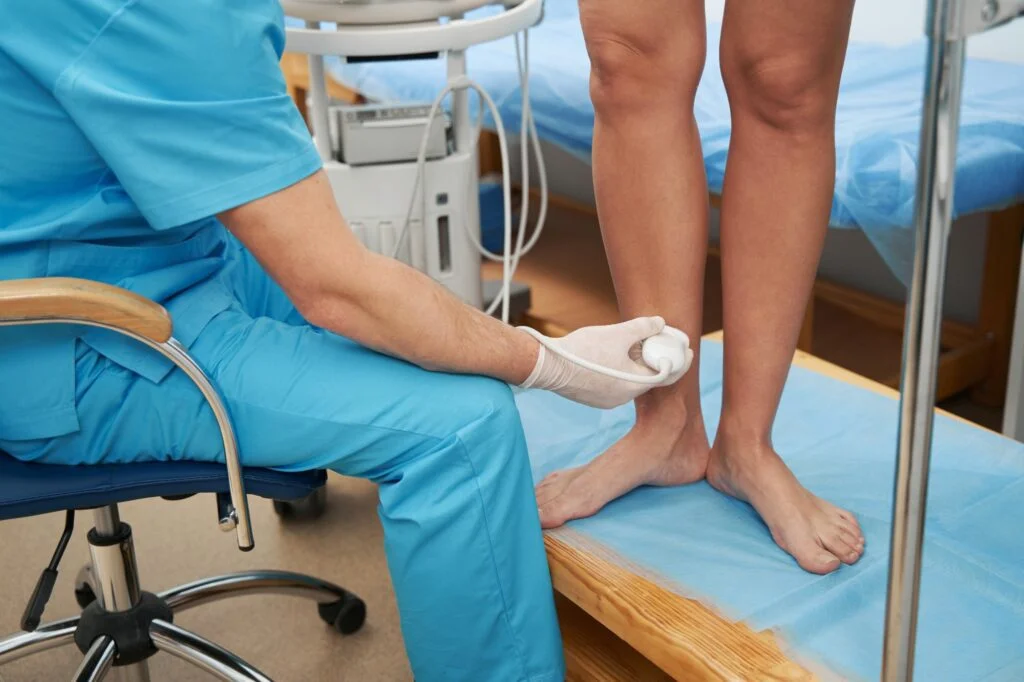
To diagnose PAD, we perform a physical exam to check your pulse and blood pressure. The ankle-brachial index (ABI) test compares the blood pressure in your arm with the blood pressure in your ankle. A doppler ultrasound is quick and painless. Based on your results, your provider at University Foot and Ankle Institute will recommend a treatment plan to relieve symptoms and improve circulation.
Treatment Options and Prevention
The goals of PAD treatment are to manage the pain and to stop atherosclerosis from progressing. Lifestyle changes may accomplish both of these goals, with the most important change being to quit smoking. All cases of peripheral arterial disease can benefit from healthy lifestyle changes, like quitting smoking, increasing your activity level, and maintaining a healthy weight.
If conservative measures are not enough to relieve your symptoms, or your case is more severe, your provider can prescribe medications to lower your blood pressure or cholesterol, manage your blood sugar, or prevent blood clots. It is important to have your primary physician, cardiologist, or vascular specialist involved with managing your prescription medications.
In severe cases, surgery or angioplasty may be needed to treat PAD. Different surgical options are available depending on the location and severity of the blockage in your arteries. Some surgeries are more invasive than others, and your provider can discuss all of your options to determine the best course of treatment for your needs. With advancements in technology, these procedures have become significantly less invasive and much safer than ever.
A healthy lifestyle can help prevent painful claudication from PAD, including quitting smoking, regular exercise, maintaining a healthy weight, keeping blood sugar in control if you have diabetes, and eating foods low in saturated fats. Working closely with your podiatrist and other specialists gives you the best chance to protect your circulation and stay active for years to come.
Find Peripheral Arterial Disease Care Nearby
Visit any of our convenient locations for expert evaluation and treatment of PAD.




Don’t wait to get your circulation checked, your feet depend on it.
We’re here to help you protect your legs and feet with expert PAD care.