
MLS Laser Therapy for Pain and Healing
A noninvasive, painless treatment that reduces pain and inflammation while helping your body heal faster.
What You Need To Know
Learn how MLS Laser Therapy works and the conditions it can help treat.
Understanding MLS Laser Therapy
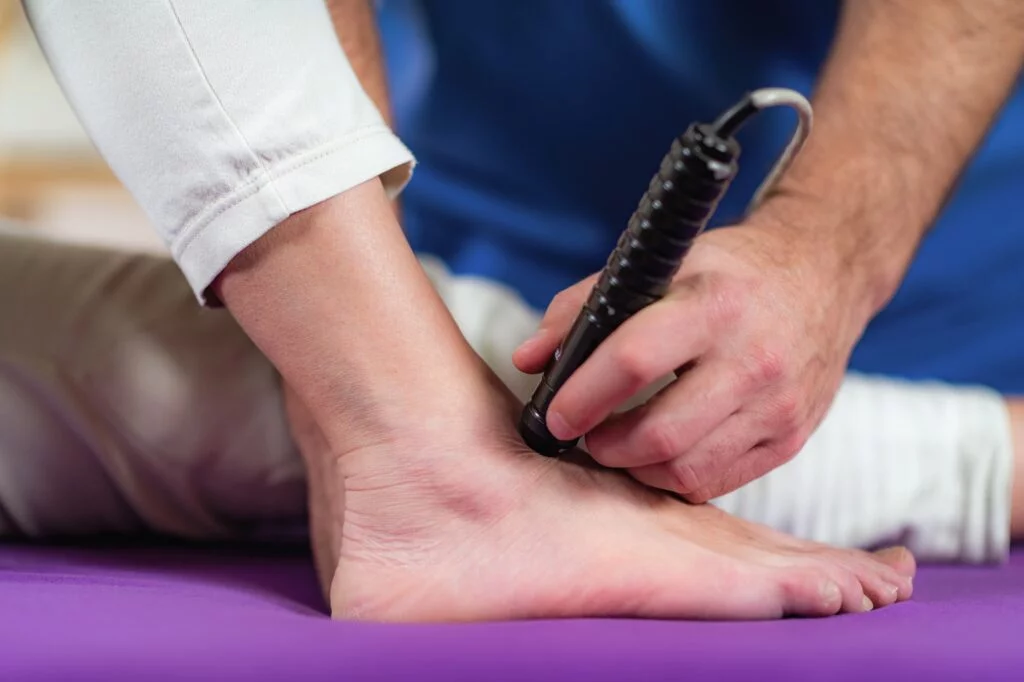
Cold laser therapy, or MLS (Multiwave Locked System) Laser Therapy, is an effective, noninvasive treatment option for patients who have acute or chronic pain. The technology delivers light in two distinct wavelengths, 808 nanometers and 905 nanometers. The lower wavelength concentrates on reducing inflammation and edema, while the higher one focuses on pain reduction, producing an analgesic effect. Together, these wavelengths affect different pain pathways for greater relief.
The therapy sends energy pulses into the treatment area, where laser light acts as a powerful anti-inflammatory and reduces swelling from edema. The energy penetrates into your tissues, stimulating cell regrowth and boosting healthy cell production so your body can repair and regenerate damaged soft tissues faster.
We use MLS Laser Therapy to aid healing for plantar fasciitis, Achilles tendonitis, and other tendon, ligament, and muscle injuries. It also helps with sprains, strains, stress fractures, arthritic conditions, neuropathy, post-operative pain, ankle injuries, and non-infected wounds. We are leaders in treating diabetic neuropathy with this Class IV laser therapy, often greatly reducing the pain and tingling associated with the condition.
Cold laser therapy is very safe when administered by a qualified medical professional. Researchers at Harvard University conducted a study of MLS Laser Therapy that confirmed its safety and efficacy, and the system has FDA approval. If pain has not responded to other treatments, schedule a consultation to find out whether MLS Laser Therapy is right for you.
What to Expect From Treatment
The effects of MLS Laser Therapy build over time. Most patients report feeling a reduction in pain before their third session. We generally recommend between seven and 10 sessions for optimal benefit, though the exact plan depends on whether your condition is acute, chronic, or post-operative.
Most acute injuries respond well with about six sessions scheduled two to three times a week for two to three weeks. For chronic conditions, the recommended total is around 12 sessions over four to six weeks, sometimes followed by a maintenance program once a week or every other week. Patients with neuropathy may need a more intense initial schedule before transitioning to less frequent visits.
The therapy is noninvasive, with no break in the skin. When the robotic arm is used, the laser stays approximately 8 inches away from the skin, so there is no downtime after a session. Treatments are painless, and some patients even doze off. The average session takes 10 to 30 minutes, making it easy to schedule during a lunch break.
Because the therapy has an analgesic effect, many patients are able to reduce or avoid oral NSAIDs and post-operative pain medications. It can also be combined with other therapies, such as physical therapy, for additive benefits. MLS Laser has been on the market since 2009, with no known side effects when sessions are spaced at least one day apart.
During your first visit, your provider will review contraindications and determine the right course of treatment. You will wear protective eyewear, and both the doctor and laser technician will remain with you throughout each session to answer questions and guide your recovery.
Locations Offering MLS Laser Therapy
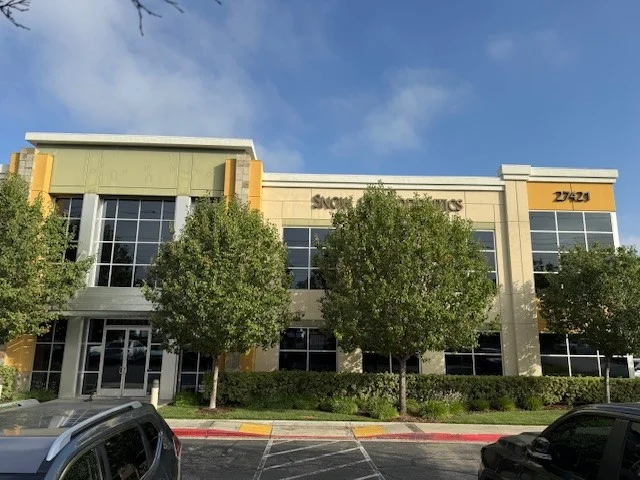
Find a University Foot and Ankle Institute location near you for MLS Laser Therapy.
Ready to find relief from pain without surgery or medication?
Let’s talk about whether MLS Laser Therapy is the right fit for you.