
Pediatric Foot and Ankle Care for Kids
Expert podiatric care for children and teens to keep growing feet healthy, strong, and properly aligned for life.
What You Need to Know About Pediatrics
Early evaluation helps your child’s feet develop correctly and comfortably into adulthood.
Caring for Your Child’s Growing Feet
Having strong, healthy feet allows your child to walk, run, and play. If your child’s feet form correctly, certain types of back and leg pain can be avoided later in life. Children’s feet are different than adult feet. When they are young, their bones are still very soft and are therefore more easily affected by abnormal pressure and forces. Teenagers’ feet are also different as they are still growing and physically developing.
Many of the foot issues our board-certified podiatrists see in adults have stemmed from issues from when the patients were children. The younger a child is assessed and diagnosed for any foot or lower limb issues, the easier it is to treat and manage the issue. Early diagnosis is the key to preventing long-term issues in your child.
Take time to evaluate your child and look out for any of the following:
– Flat feet, fallen arches, or rolled-in feet – In-toeing (pigeon-toed) or out-toeing – Walking on tiptoes – Slow or delayed to begin walking – Knock-kneed or bowlegged – Difference in leg length – Clumsiness or poor balance – Growing pains or limping – Oddly shaped toes, ingrown toenails, bunions, calluses, corns, or warts
Pain in children is never normal and can be a sign of an injury, infection, or biomechanical issue that needs addressing. You should bring your child to our office any time they experience foot pain or when you notice an abnormality in the appearance of their feet. If your child falls into any of the categories above, it is best to err on the side of caution and schedule a visit with a board-certified podiatrist.
Treatment, Orthotics, and Shoes
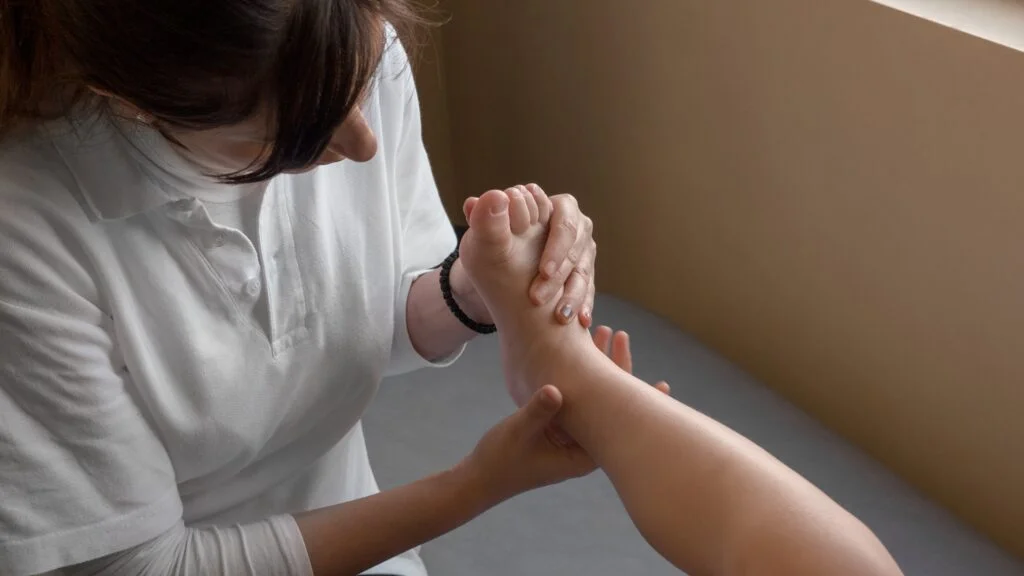
During a foot exam, the doctor will watch your toddler walk. If a gait problem exists, the doctor works to identify its cause. To help with severe flat feet, special shoes or orthoses (custom-made shoe inserts) may be prescribed. To correct mild toeing-in, your toddler may need to sit in a different position while playing or watching TV. If your child’s feet turn in or out significantly, corrective shoes, splints, or night braces may be prescribed to help the foot as it grows.
Orthotics are medical devices used to support the feet, treat foot deformities, and rectify abnormal foot movement. For children and teenagers, custom orthotics can help restore correct foot and ankle posture during the critical years of physical development. They are especially helpful early in development for correcting abnormal flat feet and in-toeing problems, and can prevent complications in the future.
If a bone or growth plate is damaged, your child may need crutches to take weight off the injury as it heals. In the case of a fracture, a cast, splint, or brace may be needed to hold the bone in place during healing.
Once your child is walking, allow them to walk barefoot inside the house and wear shoes with wide toe boxes when outdoors. Check shoe size often and avoid hand-me-downs. If you have any concerns about your child’s foot, ankle, or lower leg health, call us today to schedule an evaluation.
Related Services
Pediatric Podiatry Locations
Find a University Foot and Ankle Institute office near you for expert pediatric foot care.




Concerned about your child’s feet? Let’s get them evaluated today.
Our board-certified podiatrists are here to help kids of all ages.