Soft Tissue Injuries in Sports Medicine
Expert care for foot bursitis, synovial cysts, and other soft tissue injuries that limit comfort and mobility.
What You Need To Know
Understanding soft tissue injuries of the foot and ankle and how they are treated.
Understanding Soft Tissue Foot Injuries
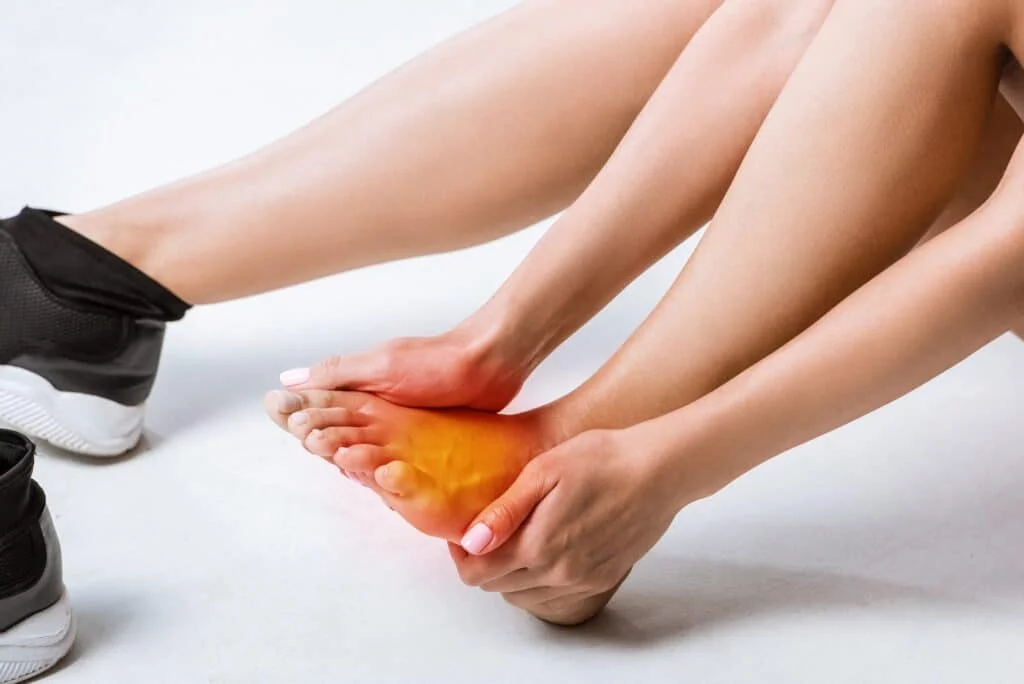
Soft tissue injuries in the foot and ankle include conditions that affect the bursae, tendons, joints, and surrounding structures. Two of the most common are foot bursitis and synovial cysts. Foot bursitis is a painful condition that occurs when the bursae (small, fluid-filled sacs that cushion the joints and reduce friction) become inflamed. It commonly affects the heel, ball of the foot, and toes, leading to discomfort, swelling, and difficulty walking.
A synovial cyst is a benign, fluid-filled sac that forms when synovial fluid escapes from a joint or tendon sheath. This fluid lubricates joints and allows for smooth movement. When a cyst develops, it can cause localized swelling and discomfort, particularly if it presses against nerves or surrounding tissues.
Common symptoms include pain and tenderness, swelling and redness, stiffness when wearing shoes, visible lumps near a joint, restricted mobility, and sometimes numbness or tingling if a nerve is compressed. Causes range from repetitive motion, improper footwear, and foot deformities such as bunions or hammertoes to arthritis, joint trauma, and chronic inflammation.
At University Foot and Ankle Institute, advanced diagnostic techniques are used to accurately identify the source of your symptoms. A specialist will assess pain, swelling, and range of motion, and may order X-rays, ultrasound, MRI, or CT scans to confirm the diagnosis. A prompt evaluation can help you avoid chronic issues and begin the right treatment sooner.
Treatment, Recovery, and Prevention
Treatment depends on the severity of your condition, and both non-surgical and surgical options are available. For mild to moderate cases, conservative care is often effective. This includes rest and activity modification, supportive footwear and custom orthotics, ice and compression, NSAIDs to relieve inflammation, and corticosteroid injections for more severe cases. Physical therapy with stretching and strengthening exercises helps improve flexibility and prevent further irritation.
For synovial cysts, aspiration using a needle, often followed by a corticosteroid injection, can reduce inflammation and shrink the cyst. Many cysts resolve on their own or respond well to non-invasive treatments.
If conservative care fails, surgery may be recommended. A bursectomy removes the inflamed bursa to eliminate chronic pain and swelling, while synovial cyst excision is a minimally invasive procedure to remove the cyst and prevent recurrence. When foot deformities such as bunions contribute to the problem, corrective surgery may also be needed.
Recovery from non-surgical treatment typically takes a few weeks. Post-surgical recovery may take several weeks to months, depending on the procedure and rehabilitation plan. To reduce your risk of future problems, wear supportive footwear, avoid repetitive high-impact activities, strengthen your foot muscles, and address joint injuries promptly. With a personalized plan, most patients regain comfort and return to the activities they enjoy.
Locations Offering Soft Tissue Care
Find a University Foot and Ankle Institute location near you for expert soft tissue injury care.




Don’t let foot pain hold you back, let’s get you back on your feet.
Our board-certified podiatrists are ready to help you find lasting relief.