
Pathology Lab Processing for Foot Care
Our on-site pathology lab supports accurate diagnosis and effective treatment of foot and ankle conditions.
What You Need to Know
How our pathology lab supports the diagnosis and treatment of your foot and ankle care.
Pathology Lab Testing at UFAI
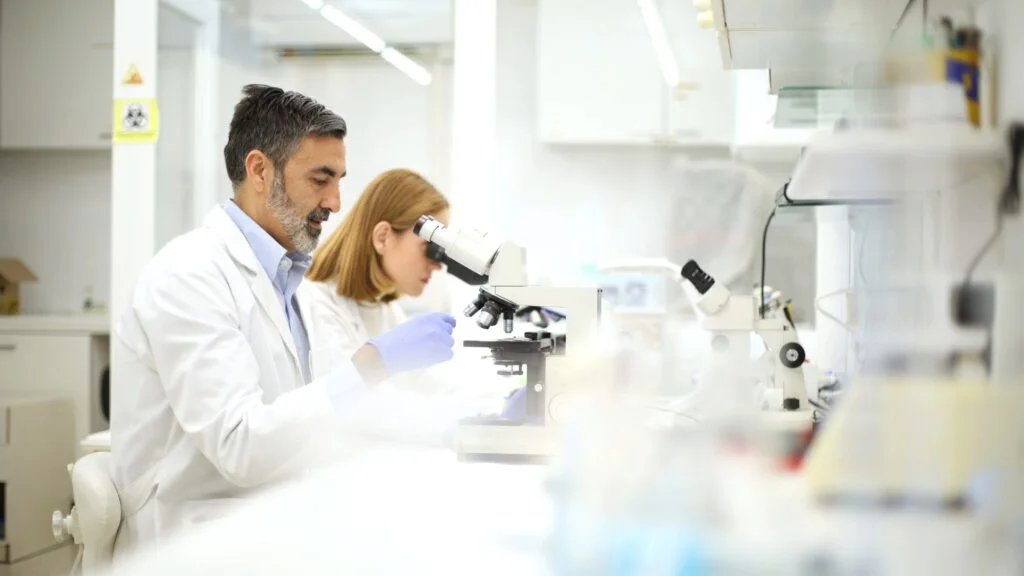
Pathology lab test results determine the cause and nature of diseases and help our doctors diagnose and treat patients correctly. University Foot and Ankle Institute offers the convenience of an on-site pathology lab, which allows for testing of body tissues (samples from biopsies) and fluids (blood) collected during your visit.
Typical services and tests include needle aspirations, fungal cultures, and bacterial cultures. These tests are used to identify infections, evaluate skin or nail changes, examine tissue removed during a procedure, and rule out or confirm underlying conditions that may be affecting your foot or ankle health.
Because our pathology processing is coordinated in-house, samples are handled efficiently and results are returned to your physician in a timely manner. This helps shorten the time between an initial concern and a confirmed diagnosis, so treatment can begin sooner.
If your podiatrist recommends a biopsy, culture, or other lab test during your appointment, the sample can typically be collected at the same visit. Once results are ready, your provider will review them with you and outline the next steps in your care plan.
How Lab Results Guide Your Care
Pathology testing plays a supporting role in nearly every area of foot and ankle care. A skin lesion, a discolored toenail, a slow-healing wound, or an unexplained lump may look similar on the surface but have very different underlying causes. Lab analysis helps identify what is actually happening at the cellular or microbial level.
Fungal and bacterial cultures, for example, help pinpoint the specific organism responsible for a nail or skin infection. This allows your provider to select a targeted treatment rather than relying on a general approach that may not fully resolve the problem. Needle aspirations can help evaluate cysts, joint fluid, or areas of suspected infection.
Tissue biopsies are used when a growth, lesion, or area of concern needs closer examination. The pathology lab processes the sample and provides a detailed report, giving your physician the information needed to recommend the right course of treatment, whether that involves medication, a minor procedure, or continued monitoring.
Having pathology processing available through the practice means fewer outside referrals and a more coordinated experience from testing through follow-up. Your provider will explain what a test is looking for, what the results mean, and how they shape the treatment plan going forward.
Locations Offering Pathology Services
Find a University Foot and Ankle Institute office convenient to you across Southern California.




Have a foot or ankle concern that needs a clear answer? Let’s take a closer look.
We’ll get you evaluated, tested if needed, and on the right treatment path.