
Total Ankle Replacement Surgery
Restore mobility and relieve chronic ankle pain with a joint-preserving alternative to fusion surgery.
What You Need To Know
Understanding ankle replacement surgery, candidacy, and what to expect.
Understanding Total Ankle Replacement
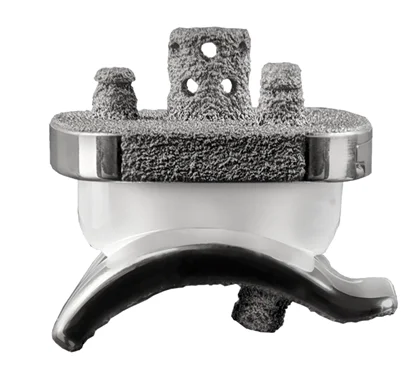
Total ankle replacement surgery, also known as ankle arthroplasty, is a procedure designed to restore function and relieve pain in patients suffering from severe ankle arthritis or joint damage. The procedure involves replacing a damaged ankle joint with an artificial implant made of metal and plastic components. Unlike ankle fusion, which restricts motion, ankle replacement preserves joint mobility, allowing for a more natural walking experience.
The ankle joint is very important for normal walking and is resistant to forming arthritis. However, if the ankle has suffered injuries, advanced arthritis can set in over time. For patients with end-stage arthritis (limitation of motion and worn-out joint surfaces), there are few treatment options outside of surgery.
Ankles are more likely to develop post-traumatic arthritis than osteoarthritis. For many patients, the trauma was an ankle fracture or a bad sprain that happened in their teens or twenties. Ideal candidates are individuals over 50 who maintain a healthy weight, suffer from severe ankle arthritis, or have had previous unsuccessful surgeries with significant pain and impaired mobility. Patients with advanced diabetes, poor bone quality, poor circulation, or active infections may not be suitable candidates.
If constant pain and limited mobility are affecting your daily life, a podiatrist will evaluate your case to determine whether total ankle replacement is the right treatment for you.
The Procedure, Recovery, and Benefits
The surgery typically takes 2 to 3 hours and is performed on an outpatient basis with an overnight hospital stay. After anesthesia, a small incision is made at the front or side of the ankle. The surgeon removes the worn-out cartilage and bone, then positions a prosthetic joint made of metal and plastic components. The incision is closed, and the foot is placed in a splint or cast to promote healing.
Since 2005, several implant designs have completed the FDA approval process, offering ease of placement and refined instrumentation for accuracy. Our clinic has experience with US designs including APEX 3D, Inbone, Infinity, Invision, Cadence, Salto Talaris, STAR, Vantage, and Zimmer Trabecular Metal.
In terms of function, ankle replacement is better than ankle fusion. Fusion limits up and down motion of the foot on the leg, while replacement preserves motion and allows improved function. The motion of the implant also protects remaining foot joints, which can develop arthritis from the increased stress of a fused ankle within 7 to 10 years after fusion.
Patients are typically non-weight-bearing for 4 to 6 weeks in a cast or protective boot, then bear some weight while wearing a boot and return to regular shoes around 8 weeks. Low-impact activities like swimming, cycling, and walking are encouraged. Full recovery takes 6 to 12 months, and your surgeon will guide your specific timeline.
Ankle Replacement Care Near You
Find a University Foot and Ankle Institute location convenient to you.


Ready to get back on your feet without the chronic ankle pain?
Book a consultation today to see if ankle replacement is right for you.