
Foot Surgery: Advanced Procedures
Surgical solutions for complex foot and ankle conditions, from minimally invasive techniques to reconstructive repair.
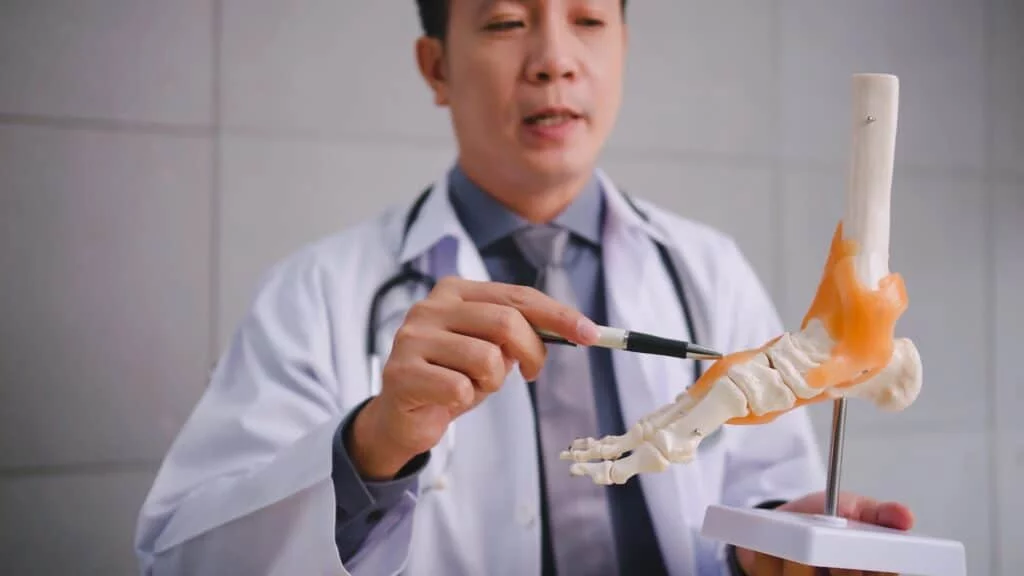
What You Need To Know
Understanding when foot surgery is recommended and what your options are.
Foot Surgery at University Foot and Ankle
Our feet carry the entire weight of our body, day in and day out. In time, this is bound to cause foot problems. Most conditions respond well to conservative treatment like medication, physical therapy, and orthotics. But sometimes foot and ankle conditions do not respond to non-surgical care, and surgery becomes the best path forward to alleviate pain and restore function.
University Foot and Ankle Institute offers a full range of surgical procedures for the foot and ankle. These include Achilles tendon repair and lengthening, ankle arthroscopy, ankle fusion and fusion reversal, ankle ligament repair, cartilage resurfacing, fracture repair, tendon transfers, and reconstructive surgery for complex deformities. Many of these procedures can be performed using minimally invasive techniques through very small incisions.
Surgery may be recommended when you experience persistent pain that limits daily activities, structural deformities that make walking or wearing shoes difficult, unstable joints from ligament damage, cartilage injuries that have not healed with conservative care, or fractures that require realignment and stabilization with hardware.
Your foot and ankle specialist will assess the amount of damage and the severity of your condition before recommending surgery. The type of procedure and the extent of reconstruction depend on your specific diagnosis, your activity level, and your goals for recovery. If surgery is the right option, your surgeon will walk you through the procedure, the expected recovery timeline, and how to prepare.
Bunion Surgery Up Close
Take a closer look at bunion surgery and how correction can address the underlying deformity while supporting improved alignment and function.
Hammertoe Correction Up Close
Explore Modern Bunion Solutions
Surgical Techniques and Recovery
Minimally invasive foot surgery is one of the main surgical approaches we offer. These procedures are performed through extremely small incisions to correct many painful foot conditions, including bunions, hammertoes, stiff big toe, painful calluses, diabetic foot ulcerations, and heel pain. Minimally invasive surgery causes less injury to soft tissue, results in less pain, requires shorter surgery times, and leaves smaller scars than traditional open surgery.
Ankle arthroscopy is another less invasive technique performed through small incisions using a telescopic camera and small tools placed into the joint. It is used to treat joint adhesions, small joint fractures, bone spurring, and soft tissue build-up. Patients typically begin range of motion soon after surgery, which helps prevent scar tissue and speeds recovery.
For cartilage damage, we offer microfracture surgery, cartilage resurfacing with donor grafts, Biocartilage, and DeNovo cartilage repair using juvenile cartilage allografts. For Achilles tendon ruptures, the Percutaneous Achilles Repair System (PARS) offers a minimally invasive alternative to traditional open repair, with smaller incisions and faster return to mobility.
Recovery varies by procedure. Many patients spend a period non-weight-bearing in a splint or cast boot, followed by protected weight-bearing and physical therapy. Your surgical team will provide a personalized recovery plan and follow-up schedule so you know what to expect at every stage of healing.
Foot Surgery Locations Near You
Find a University Foot and Ankle Institute location offering surgical care close to home.



Ready to talk with a foot and ankle surgeon about your options?
We’ll help you understand what’s causing your pain and what comes next.