
Shockwave Therapy for Foot Pain
A noninvasive, FDA-cleared treatment that uses pressure waves to accelerate healing of chronic foot and ankle pain.
What You Need To Know About Shockwave Therapy
Learn how Shockwave Therapy works and which conditions it can treat.
Understanding Shockwave Therapy
Shockwave Therapy is an effective and noninvasive, FDA-approved technique for safely treating bone and soft tissue disorders around the foot and ankle. The technology relies on a unique set of pressure waves that stimulate metabolism, enhance blood circulation, and accelerate healing.
Sound wave pulses are sent through the area of injured tissue, gradually increasing in intensity throughout the session. This causes harmless micro-trauma in the affected area, stimulating your body’s own healing response through improved circulation and stem cell formation. The result is faster regeneration of injured tissue and reduced pain.
Acute injuries typically respond to RICE: rest, ice, compression, and elevation. Over time, though, injuries can become chronic and resistant to the body’s natural healing process. By encouraging new blood vessel formation, this treatment helps healing cells migrate to the injured tissue and can become a fundamental part of care.
Common conditions treated include plantar fasciitis, Achilles tendonitis, posterior and anterior tibial tendonitis, plantar plate injuries, peroneal tendonitis, and interdigital neuromas. It’s especially beneficial for patients with chronic heel pain who haven’t found relief through medications, orthotics, steroid injections, or stretching. If conservative care hasn’t resolved your pain, schedule an evaluation to see whether this treatment is right for you.
Treatment Process, Recovery, and Results
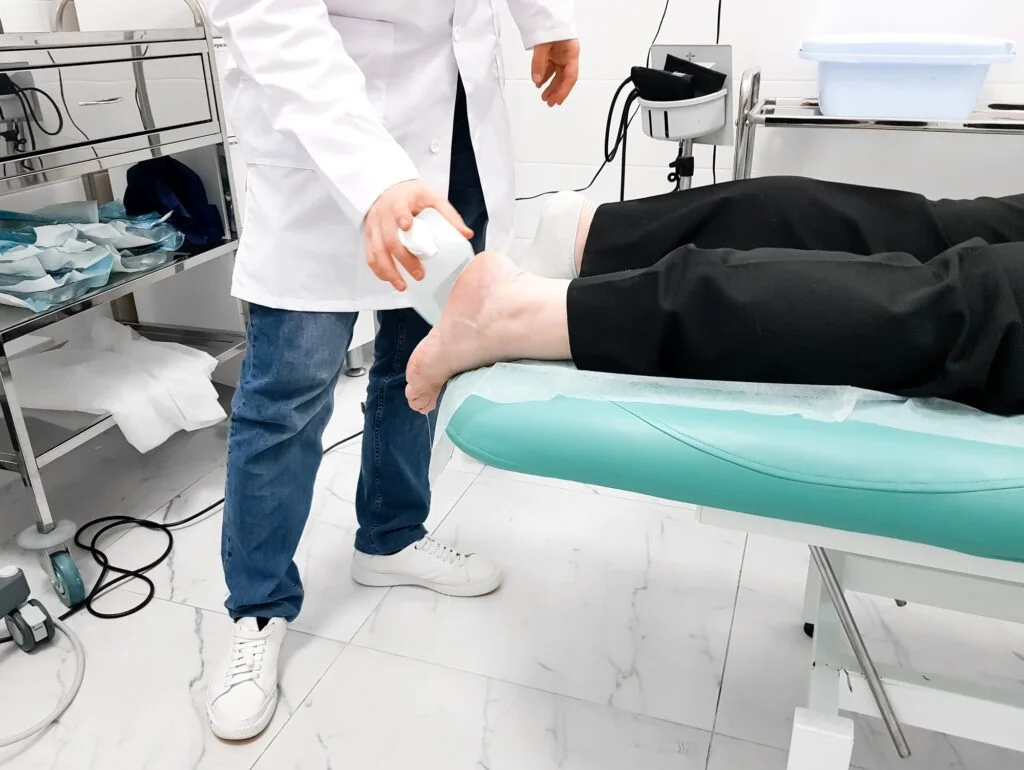
The treatment is administered in-office with a hand-held applicator. Coupling gel is applied to the treatment area, and pressure waves are released as the applicator moves over the area in a circular motion. A typical session lasts 5 to 15 minutes, and three sessions are generally required, spaced one to two weeks apart.
Anesthesia, nerve blocks, and sedation usually aren’t necessary, since the treatment is well tolerated. You’ll walk out able to resume normal weight-bearing activity, return to work within 24 to 48 hours, and resume strenuous activities after about four weeks.
Because it’s noninvasive, recovery is swift. Some patients experience mild discomfort, redness, or bruising around the treatment area, which usually resolves within a few days, and no bandages or casts are required. Safety and effectiveness haven’t been established for patients with malignancies or deep vein thrombosis, so your doctor will review your history first to confirm it’s appropriate.
Healing rates vary: some patients notice immediate pain relief, while others see gradual improvement over four to eight months after their last session. Most patients feel significantly better within a month, with full benefits taking up to three months. Over 80% of patients treated report being pain free or experiencing significant pain reduction, and our team will guide you through every step of the process.
Locations Offering Shockwave Therapy
Find a University Foot and Ankle Institute location near you offering shockwave therapy.


Don’t let chronic foot pain hold you back any longer
We’re here to help you get back on your feet with noninvasive shockwave care.